20% OFF. BLACK FRIDAY DEAL. CODE: BF20

Laser vs. Ultrasonic Timing Gates: What Changes on the Track?
Understand how optical and ultrasonic timing detect athletes. Compare setup, trigger behaviour and repeatability before choosing a sprint timer.
Motion Trials
11/10/20261 min read
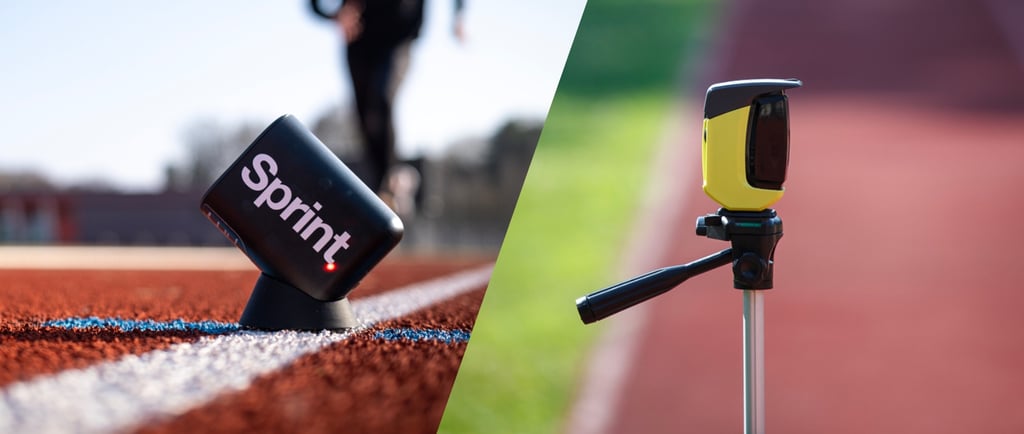

Optical timing systems detect an athlete through a light beam. MotionTrials Sprint detects a passing athlete with ultrasound. Compare the specific system’s setup, detection behaviour and suitability for the test you want to repeat.
Start with the detection method
Many optical systems use an emitter and a receiver or reflector. The clock reacts when the athlete interrupts the beam. Mounting height, alignment and the way the system handles an arm or leg crossing first can influence the result. Some systems use two beams or signal processing to handle premature triggers. VALD’s guide to timing gate detection
MotionTrials Sprint uses ultrasound and ground-standing sensors. Follow the manufacturer’s recommended position and orientation, then verify the detection area with a practice run. An ultrasonic sensor still needs a clear, repeatable setup. MotionTrials technical specifications
Run a side-by-side trial on the same sprint
Agree where each system starts and stops the clock, then time the same runs where possible. Record the distance and both readings. Compare the average difference and the spread across individual runs. A small average difference can coexist with larger differences on some trials.
The published MotionTrials comparison with Microgate Witty used simultaneous 20 m readings. Its summary reports the mean difference and agreement limits, which are useful to read together. See the Sprint vs. Witty report
Evaluate the job your team needs to do
Check setup time, timing points supported, equipment to carry and how results are stored. For outdoor use, test on the actual surface and check the operating conditions specified for the device. If you need a competition result or a formal assessment, follow the protocol’s approved timing requirements.
Request a MotionTrials demo if you want to test the setup with your athletes.
Sources

Designed and assembled in the EU.
© 2026, Motion Trials


¹ Products are processed and dispatched from the EU. Delivery is free on orders over €50 within the European Union. Import duties, local taxes, or handling fees may apply depending on your country's customs regulations and must be paid by the customer. Prior to ordering, please check your local customs requirements or contact our support team at support@motiontrials.com